Your Sportsbook Knows You Logged In From the Kitchen Tablet
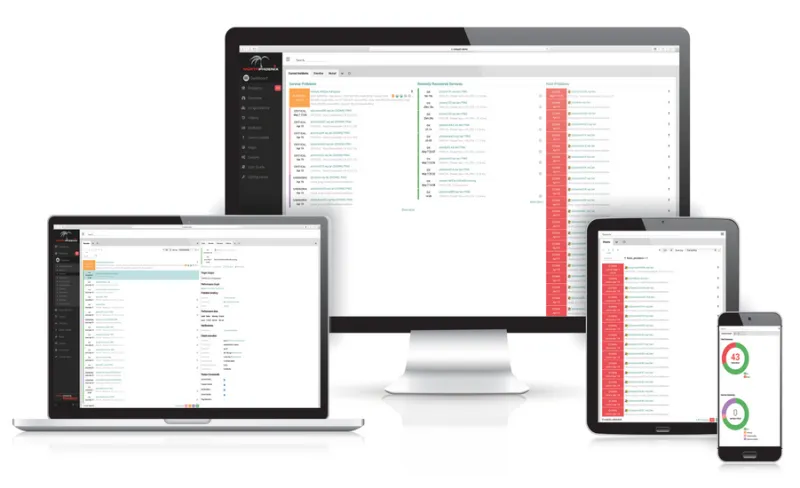
Photo: CapaLily, CC0, via Wikimedia Commons
The login that looked completely normal
You check the line on your phone at lunch. You log in on the laptop after work to look at a player prop. You use your partner's iPad on the couch. Thursday you are on hotel wifi, and you have a VPN on because you always do. One account, one person, nothing weird.
The book sees something different. It sees a cluster of access points that does not quite line up with a single human being in a single place, and it does what fraud systems are built to do: it slows down, asks questions, or flags the account for review.
That is not paranoia on their part. It is also not something you can argue your way out of at the withdrawal window. The better move is understanding what gets tracked and stopping the flag from tripping in the first place.
What a sportsbook actually sees at login
When you tap sign in, a licensed US operator is collecting far more than a username and password. The typical stack includes:
- A device fingerprint. Screen resolution, installed fonts, browser build, timezone, graphics driver quirks, and a hashed canvas signature that stays surprisingly stable across sessions.
- IP address and coarse geolocation, plus the internet provider behind it.
- Login cadence. What time, how often, how quickly after a deposit, how quickly before a bet.
- Cookies and local storage from previous sessions on that device.
- Session behavior after login. Do you navigate like the usual account holder or like someone who has never seen the layout?
None of this is exotic. It is the same fraud stack a bank runs. The difference is that a sportsbook also has to enforce state-by-state licensing rules, which makes location data a compliance requirement rather than a nice-to-have.
Why device-hopping looks like something else
The patterns that trigger a review are the ones that overlap with problems the book is legally required to catch.
Multiple accounts. Bonus abuse, arbitrage syndicates, and people dodging self-imposed limits all look like one person with several profiles. Device and IP overlap is the fastest way to spot it.
Bonus and promo abuse. A welcome offer claimed from three households on one fingerprint is a red flag the promotions team shares with the risk team.
Account takeover. If your credentials leak and someone in another state logs in, the device mismatch is the alarm.
Geography and VPN use. With sports betting regulated state by state, a login routed through a commercial VPN can look like an attempt to place wagers from a state where the operator is not licensed to accept them. That is a compliance issue, not just a preference.
Shared logins. Giving your cousin your password so he can check a line is technically a terms-of-service violation at essentially every major operator, and it creates the exact same signature as a takeover.
What happens when the flag trips
Usually nothing dramatic at first. You might get an email verification code you did not expect, a forced logout, or a prompt to confirm your identity. If the system is less sure, the review happens quietly in the background and you find out when a withdrawal sits in pending longer than usual.
At the sharper end you get a request for a government ID, a selfie holding it, and proof of address. Accounts can be temporarily locked while a compliance team works through it. None of this is fast, and none of it happens at a convenient time.
An account-hygiene playbook that is not a password lecture
Pick a home setup and stay on it
Two devices is unremarkable. Six devices across three states in a week is not. Use your main phone and one computer for the things that matter — deposits, withdrawals, limit changes — and keep the random devices for casual browsing if you must.
Turn location services on for the app
A betting app that cannot confirm where you are will ask you to prove it in slower ways. Allowing precise location inside the app is usually the least friction path, ironically.
Skip the VPN on betting days
If you would not want to explain the routing to a compliance analyst, do not route through it. Turn it off, log in, do your business, turn it back on.
Do not share credentials, even with family
A household tablet is fine if it is genuinely your household and you are the one logging in. Handing out the password is a different thing and it shows up in the device history.
Clean out old sessions
Most operators list active devices in account settings. If you see something you do not recognize, kill the session and change the password. This is also the single best early-warning system for a takeover.
Tell support before you travel
A quick message saying you will be logging in from out of state for a week saves a lot of back and forth. It takes two minutes and it pre-answers the question the system is going to ask anyway.
Keep your verification documents current
The review is annoying. The review plus an expired ID is worse.
Normal versus not
Two devices on one home network, logging in at consistent times, betting from a location that matches your registered address, is the boring baseline. What raises eyebrows is rapid device churn, logins from multiple regions in a short window, commercial VPN endpoints, and a sudden shift in betting behavior right after a password change.
Consistency is the whole game here. A predictable account that logs in from the same places at the same times does not get reviewed — it gets paid. Whatever else you do with your betting, keep the front door boring.