The Clock Is Already Against You: How Real-Time Line Movement Ate the Retail Bettor's Edge
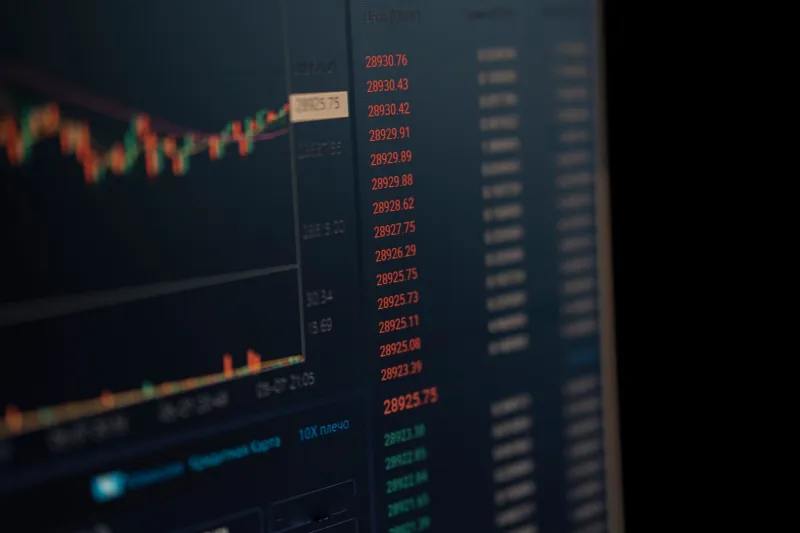
There's a version of sports betting that lives in the imagination of most casual bettors—one where careful research, a sharp eye for value, and a deep knowledge of the sport are enough to consistently find an edge. It's a satisfying picture. It's also increasingly disconnected from how modern betting markets actually function.
The uncomfortable truth is that the window between when useful information enters the market and when sportsbooks have already priced it in has shrunk to something that barely registers on a human timescale. We're not talking minutes anymore. In many cases, we're talking seconds—or less.
If you want to play this game intelligently at R2PBet, you need to understand not just what the lines mean, but how fast they move and why.
The Machine Is Already Watching
Modern sportsbooks aren't staffed by a room full of sharp guys with whiteboards updating odds by hand. The pricing engine behind most major books is algorithmic, pulling from a constant stream of data inputs: injury reports, weather, public betting percentages, sharp action triggers, and in some cases, social media sentiment.
When a starting quarterback is ruled out thirty minutes before kickoff, the line doesn't wait for a human to notice. The algorithm detects the injury report the moment it's published, cross-references it with historical impact data, and moves the number—often before the news has even propagated across sports media platforms.
For retail bettors who learned about the injury from a push notification, a quick scroll through Twitter, or a sports radio segment, the arbitrage is already gone. The market adjusted while you were still processing the headline.
This isn't a bug in the system. It's the system working exactly as designed.
Where Sharp Money Fits Into the Timeline
Algorithms aren't the only force accelerating line movement. Professional bettors—the so-called sharps—operate with infrastructure built specifically around speed. They employ data scrapers, direct feeds from injury databases, and in some cases, relationships that give them access to information earlier than the general public.
When sharp money hits a line, books respond quickly. Most major sportsbooks track the betting patterns of known sharp accounts and treat significant action from those accounts as a signal to reprice. One well-timed bet from a credible sharp can move a spread half a point or more within seconds.
For the average bettor watching a game at a bar or doing research on their lunch break, this creates a compounding disadvantage. Not only are algorithms faster, but the professional bettors who occasionally beat those algorithms are also faster—and their action reshapes the lines that retail bettors eventually see.
By the time the public money piles on, the line has already been moved by two separate waves of faster, better-informed action.
The Shrinking Window: What It Actually Looks Like
Let's make this concrete. Say a key offensive lineman for a top NFL team is listed as questionable on a Friday injury report. You do your homework over the weekend, decide his absence would meaningfully affect the spread, and plan to bet accordingly if he's ruled out Sunday morning.
Sunday morning arrives. The official ruling comes in at 11:47 AM Eastern. Within roughly 90 seconds, the spread at most major books has already adjusted by a point and a half. By the time you've opened your app, navigated to the game, and confirmed the news, you're looking at a line that has already absorbed the information you were trying to exploit.
This plays out across every sport, every week. The window exists. It's just measured in units that human reaction time can't reliably compete with.
So Where Does That Leave You?
Here's where the conversation gets more practical—because while the speed disadvantage is real, it doesn't mean retail bettors are completely without options. It just means the strategy has to shift.
Stop trying to react faster. Start positioning earlier.
The most actionable edge available to regular bettors isn't speed—it's timing in the other direction. Betting early in the week on NFL games, before sharp money has fully shaped the line, occasionally offers better numbers than you'll find by Sunday. The early line is often softer, set more conservatively by books that haven't yet received significant sharp input.
Yes, this comes with its own risks—new information can emerge that makes your early position look bad. But if your analysis is sound and you're comfortable with the uncertainty, early positioning is one of the few ways retail bettors can legitimately access value before the market fully matures.
Watch line movement as information, not instruction.
Rather than chasing lines, use them diagnostically. If a line moves significantly in one direction without any obvious public catalyst—no big injury news, no weather change, no obvious public betting surge—that movement often reflects sharp action. It doesn't automatically mean you should follow it, but it's data worth factoring into your thinking.
Conversely, if a line moves opposite to where heavy public money is going, that's a book shading against the public. Understanding why a line moved tells you something about market dynamics that the number alone won't reveal.
Find the books that are slower to adjust.
Not all sportsbooks operate at the same speed. Some smaller or newer platforms are slower to react to sharp action and may carry stale lines for slightly longer windows. Maintaining accounts at multiple books—and knowing which ones tend to lag—gives you a modest but real structural advantage.
This is less about being faster than algorithms and more about finding the pockets in the market where the speed disadvantage is temporarily smaller.
The Honest Assessment
None of this is a magic fix. The architecture of modern sports betting is genuinely tilted toward speed, and that speed advantage belongs to the technology and the professionals who built their operations around it.
What retail bettors can do is stop pretending the game is purely analytical and start treating timing as a strategic variable. Your research still matters—it just matters more when it's deployed at the right moment in the line's lifecycle, not after the market has already done its work.
At R2PBet, the goal has always been to help you make smarter decisions with the information you actually have access to. And right now, one of the smartest decisions you can make is understanding that the clock is always running—and building your approach around that reality instead of fighting it.